Stage 2 ECU remapping is a more advanced approach to vehicle tuning that combines ECU calibration with a vehicle configuration capable of supporting the intended performance target.
Unlike a typical Stage 1 calibration, Stage 2 applications may involve supporting hardware modifications. The exact requirements depend on the engine, turbocharger, ECU, exhaust system and the specific tuning strategy used.
What Is Stage 2 ECU Remapping?
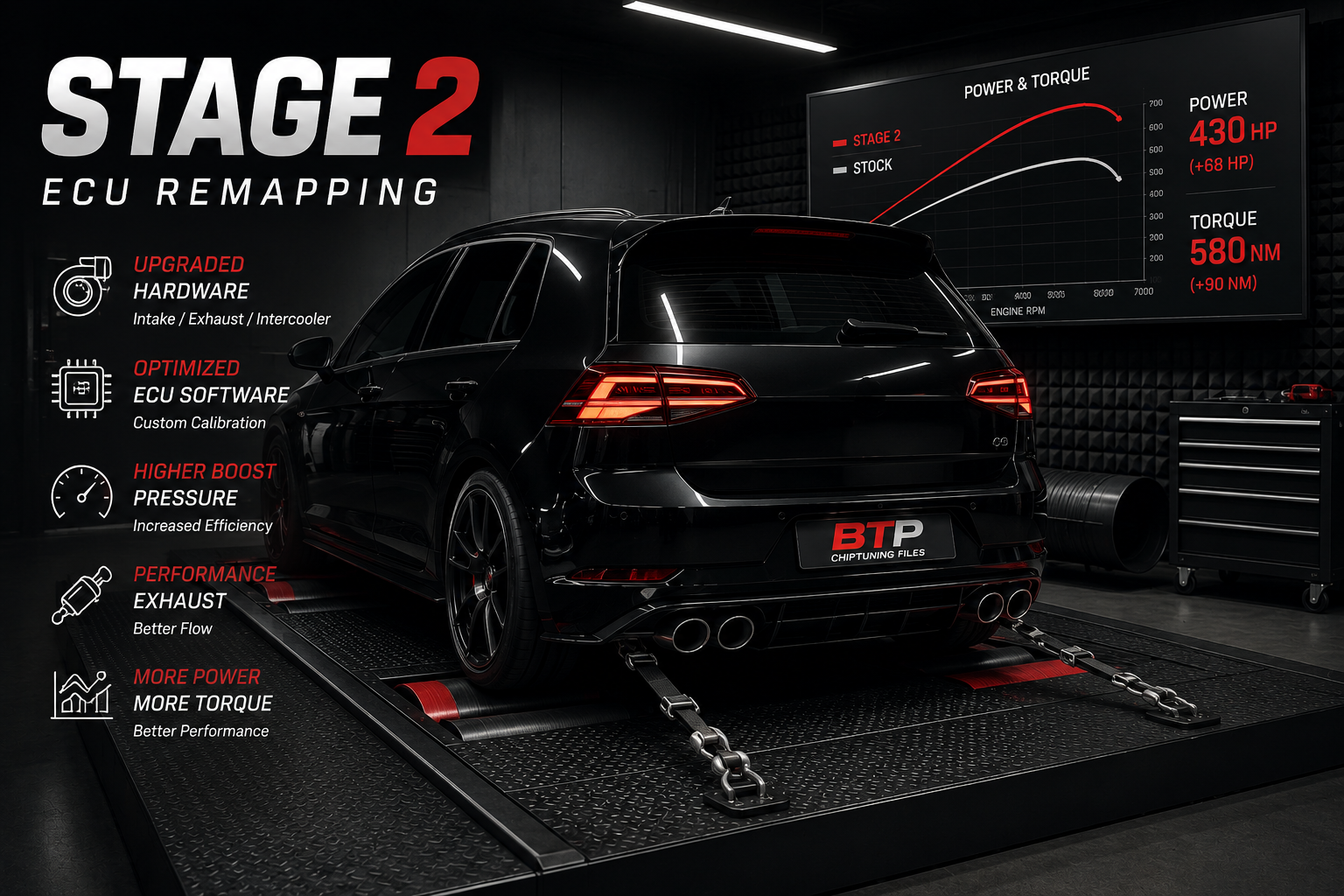
Stage 2 ECU remapping is a higher level of engine calibration designed for vehicles that may have additional supporting hardware installed.
The ECU calibration is developed around the actual vehicle configuration rather than treating the software and hardware as separate components.
Depending on the application, the calibration may take into account changes to the exhaust system, intake system, intercooling or other supporting components.
Stage 2 is not defined by one universal hardware package. Requirements and calibration strategy vary between vehicles, engines and tuning setups.
How Does Stage 2 Tuning Work?
Stage 2 tuning begins with understanding the vehicle's current hardware and ECU software.
The calibration is then developed to work with the available hardware and the desired performance characteristics.
This makes accurate identification of the ECU software and the vehicle configuration particularly important when preparing a Stage 2 calibration.
Stage 2 Hardware Requirements
Supporting hardware is one of the main differences between Stage 1 and Stage 2 tuning.
Depending on the vehicle, Stage 2 setups may include upgraded or modified components intended to support increased airflow, cooling or exhaust flow.
The required hardware should always be determined according to the specific engine and tuning strategy. There is no universal Stage 2 hardware specification that applies to every vehicle.
What Performance Gains Can Stage 2 Provide?
Stage 2 tuning can provide greater performance potential than a typical Stage 1 calibration when the supporting hardware and calibration are properly matched.
Potential improvements may include increased power, torque, throttle response and overall engine performance.
The actual result varies according to the engine, turbocharger, hardware configuration, fuel quality, ECU strategy and vehicle condition.
Stage 2 and Turbocharged Engines
Turbocharged engines can have significant tuning potential because ECU calibration can influence boost control, torque management and other engine parameters.
However, increasing performance also makes the condition and capability of the supporting hardware increasingly important.
A Stage 2 calibration should therefore be developed around the actual turbocharger, cooling system, exhaust configuration and other relevant components.
Stage 2 vs Stage 1 ECU Tuning
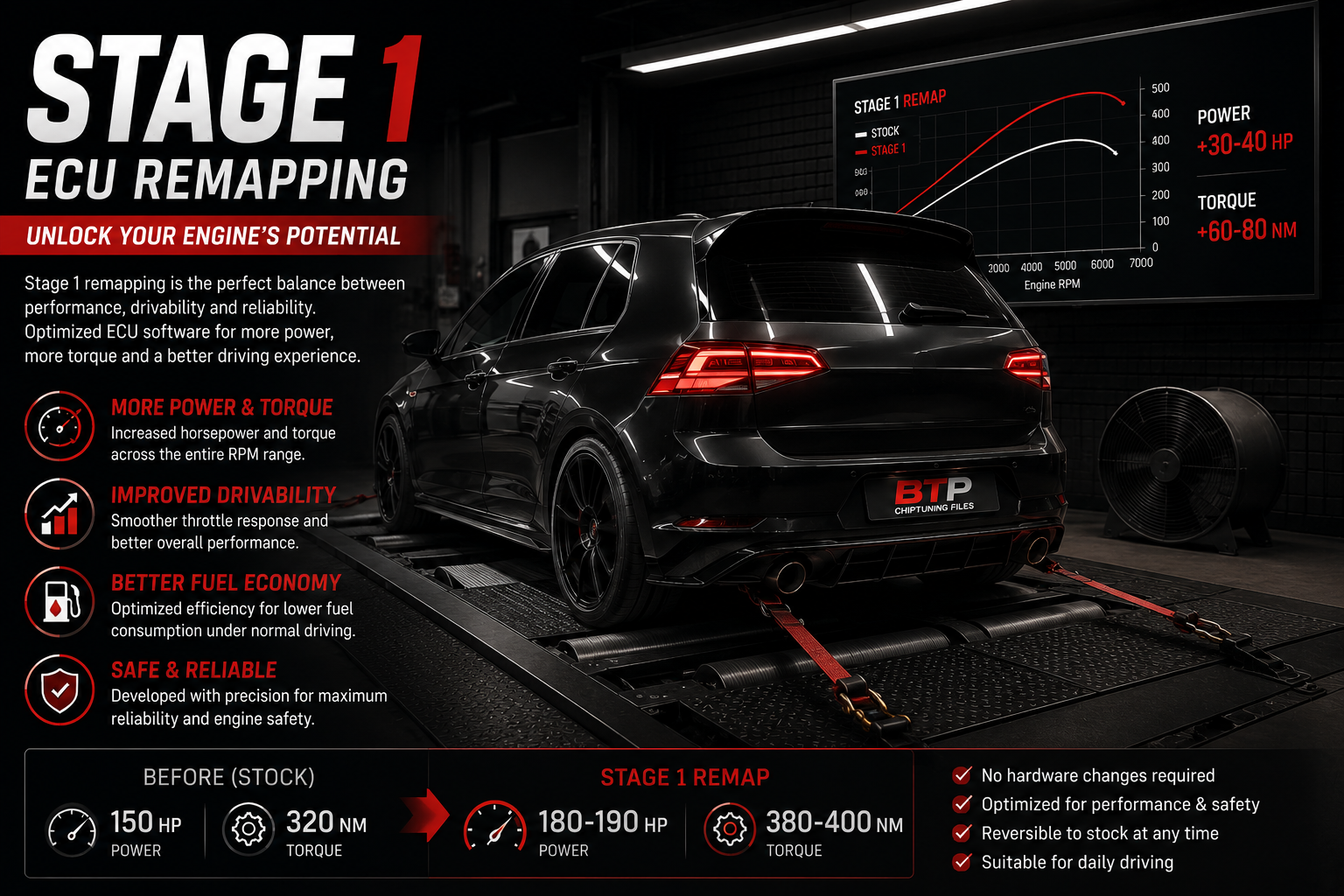
Stage 1 generally focuses on ECU calibration while retaining the original hardware configuration.
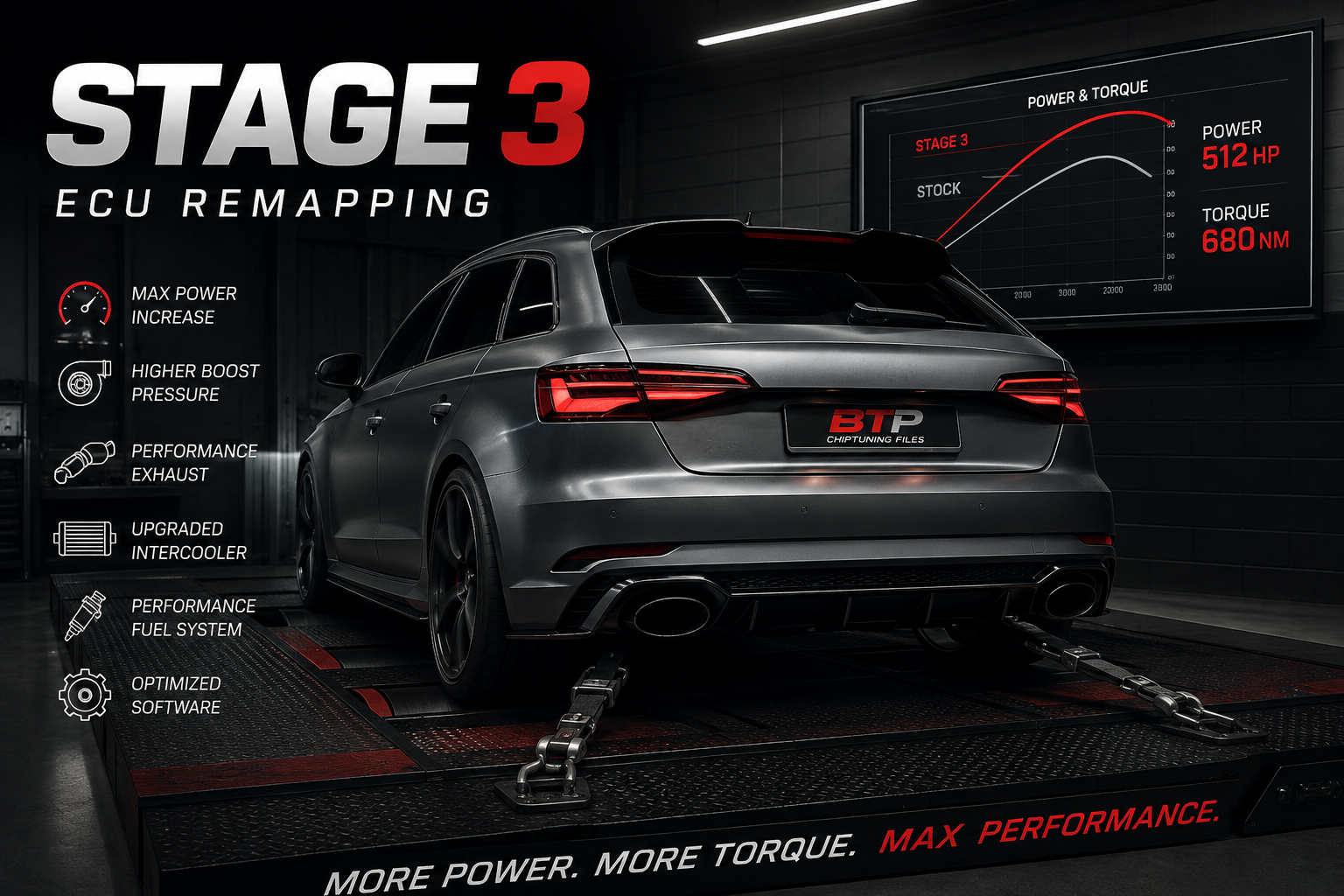
Stage 2 is typically intended for a vehicle with additional supporting hardware or a configuration capable of supporting a more advanced calibration.
The correct choice depends on the vehicle, existing hardware and the performance target rather than simply selecting the highest available stage.
Does Stage 2 Affect Reliability?
Any increase in engine performance can place additional demands on the engine and supporting components.
For this reason, vehicle condition and hardware suitability become particularly important when considering Stage 2 tuning.
A professional calibration should take the capabilities and limitations of the individual vehicle into account rather than pursuing maximum output without considering the complete setup.
Stage 2 tuning should be considered together with the condition and capability of the complete vehicle configuration.
Is Stage 2 Suitable for Daily Driving?
Stage 2 vehicles can be used for daily driving, but suitability depends on the hardware setup, calibration and intended use.
More aggressive hardware and calibration choices can change the vehicle's driving characteristics, maintenance requirements and overall behavior.
The ideal setup should therefore balance performance with the requirements of the vehicle's normal use.
Who Is Stage 2 Tuning For?
Stage 2 tuning is generally aimed at vehicle owners who want to move beyond a standard Stage 1 calibration and have, or are prepared to install, the supporting hardware required by their chosen setup.
It can be appropriate for performance-focused applications where the vehicle configuration has been prepared for a more advanced ECU calibration.
The most suitable approach depends on the vehicle, engine, hardware and intended use.
Frequently Asked Questions.
Stage 2 ECU remapping is a more advanced calibration approach designed around a vehicle configuration that may include supporting hardware modifications.
Stage 2 applications may require supporting hardware depending on the vehicle and tuning strategy. There is no universal hardware package that applies to every Stage 2 setup.
There is no universal power increase for Stage 2 tuning. Results depend on the engine, turbocharger, hardware configuration, ECU calibration, fuel quality and vehicle condition.
Stage 1 generally focuses on ECU calibration using the original hardware configuration, while Stage 2 may be developed around additional supporting hardware and a more advanced performance target.
The suitability of Stage 2 depends on the vehicle, hardware, engine condition and calibration strategy. Supporting components and vehicle condition become increasingly important as performance targets increase.
A Stage 2 vehicle can be used for daily driving, but the suitability depends on the hardware configuration, calibration and the owner's intended use.
Fuel consumption depends on driving style, vehicle configuration and operating conditions. Increased performance can lead to higher fuel consumption when the additional power is frequently used.
In many cases the original ECU software can be restored when the appropriate original file is available. However, returning to the original calibration does not necessarily reverse physical hardware modifications.