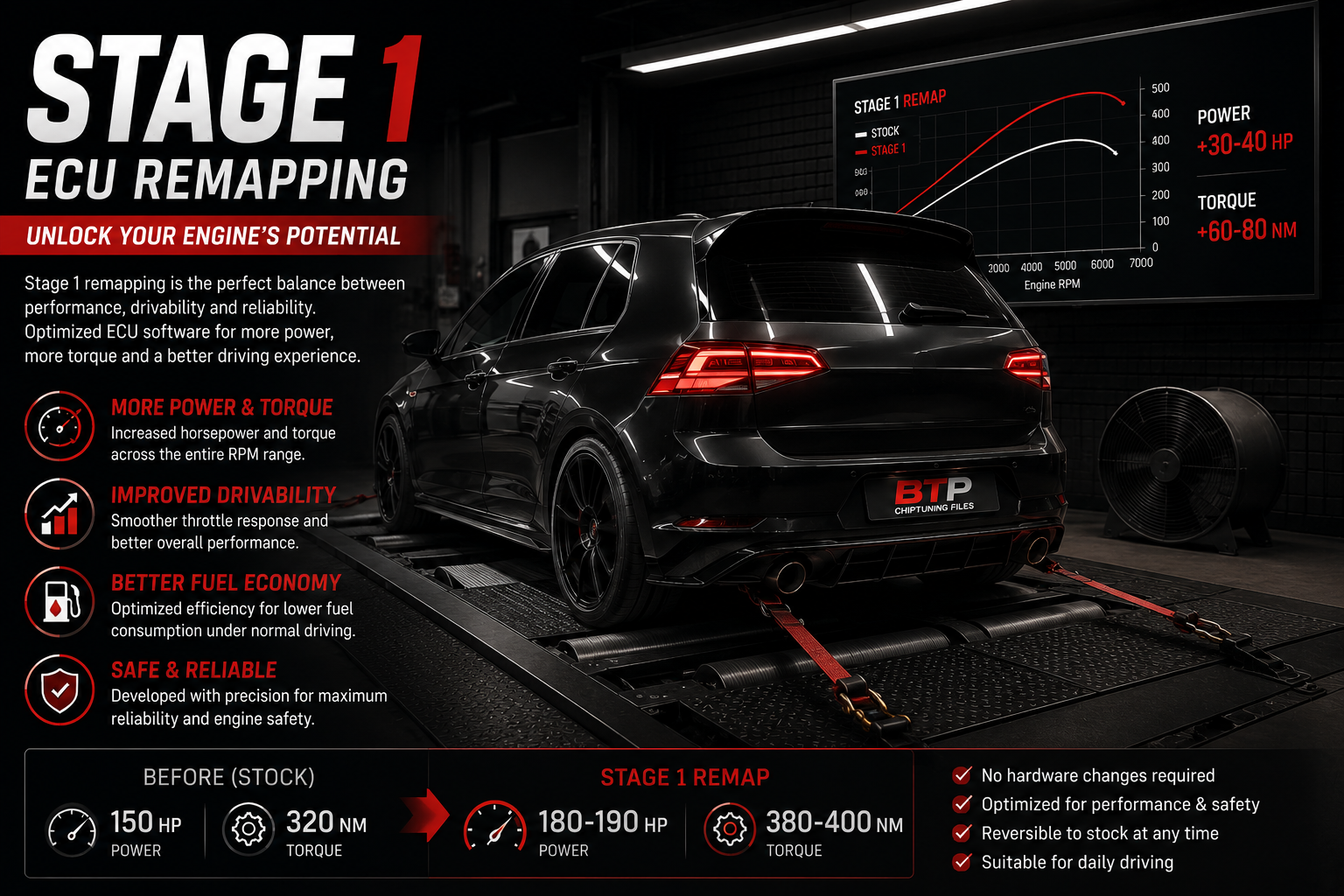
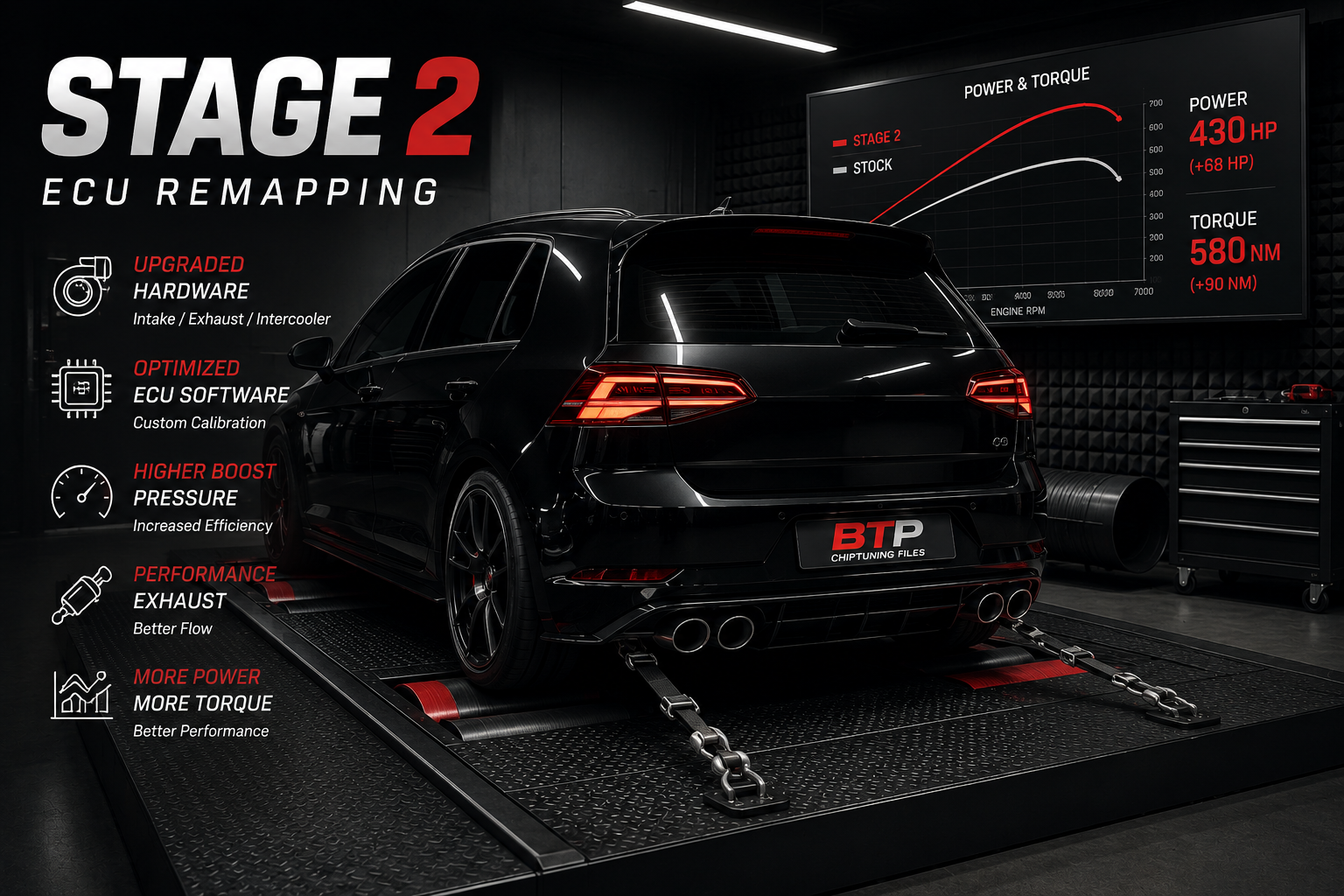
Fuel economy tuning focuses on optimizing ECU calibration and engine operation with efficiency and everyday drivability in mind.
Fuel consumption is influenced by many factors, including engine configuration, vehicle condition, driving style, traffic conditions, fuel quality and load. ECU calibration is therefore only one part of the overall equation.
What Is Fuel Economy Tuning?
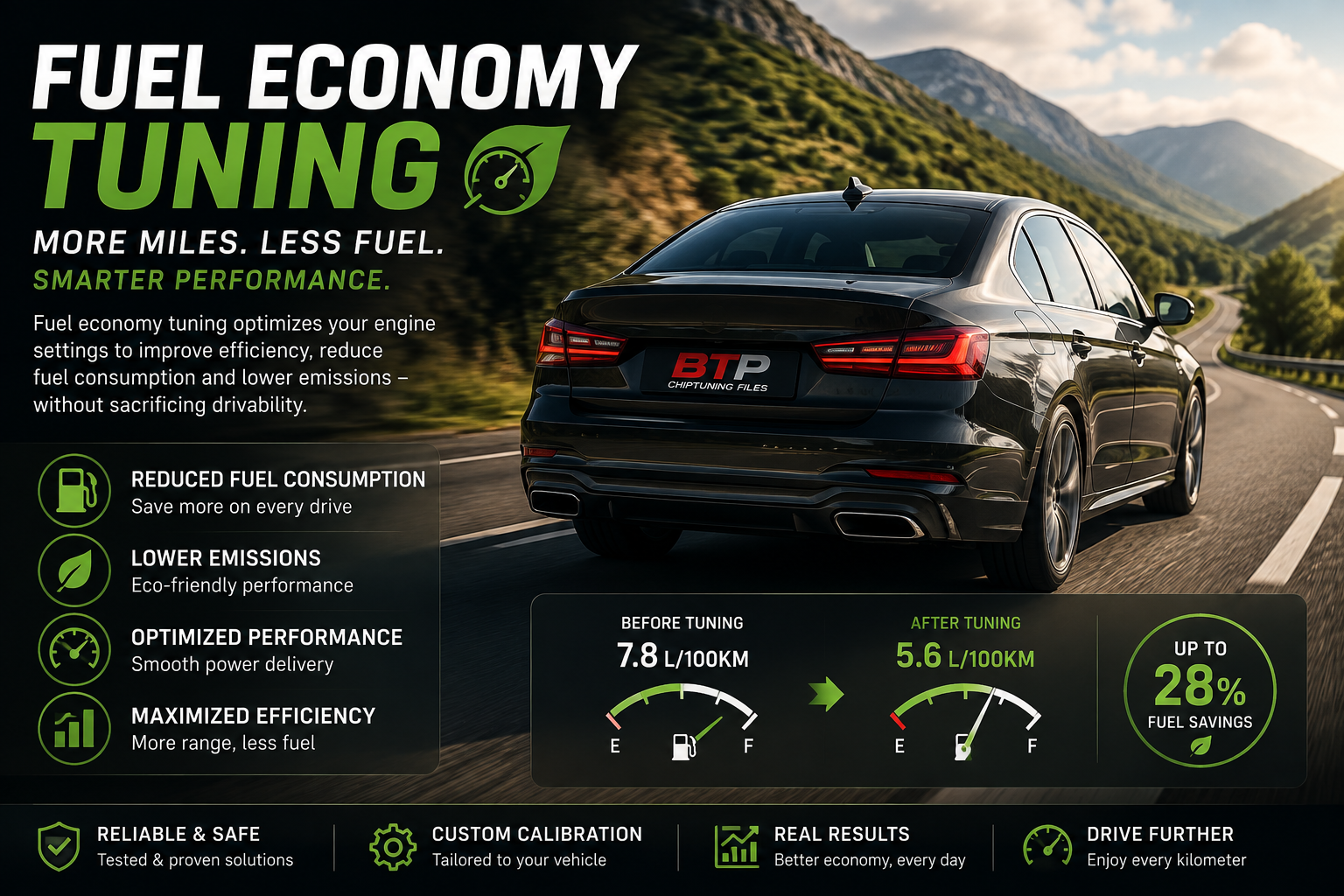
Fuel economy tuning is an ECU calibration approach that focuses on how the engine delivers torque and responds under normal driving conditions.
The objective is not simply to reduce fuel delivery. A suitable calibration should consider the complete operating range of the engine and maintain appropriate drivability.
Depending on the vehicle and engine configuration, optimization may focus on areas such as torque delivery, throttle response and engine operating efficiency.
Fuel economy is influenced by many factors outside the ECU calibration itself, so no specific fuel-saving result can be guaranteed for every vehicle.
How Does Fuel Economy Tuning Work?
The process begins with identifying the vehicle, engine and ECU software. The original calibration provides the basis for understanding how the engine is currently controlled.
Relevant calibration areas can then be evaluated with the goal of creating a more appropriate torque delivery and engine response for the intended use.
The exact calibration strategy depends on the engine, ECU system, fuel type and vehicle configuration.
Torque Optimization and Fuel Economy
Torque delivery plays an important role in everyday driving. A vehicle with stronger low and mid-range response may require less throttle input in some driving situations.
This does not mean that increasing torque automatically reduces fuel consumption. The result depends on how the vehicle is driven and how the available performance is used.
A balanced calibration should therefore consider both performance and drivability rather than focusing on a single parameter.
Driving Style and Fuel Consumption
Driving style is one of the most important factors affecting real-world fuel consumption.
Frequent acceleration, high engine speeds, heavy throttle use and aggressive driving can significantly increase fuel consumption regardless of the ECU calibration.
Conversely, smooth acceleration, appropriate gear selection and consistent driving can help reduce unnecessary fuel usage.
Diesel vs Petrol Fuel Economy Tuning
Diesel and petrol engines use different combustion strategies and engine management systems, meaning that fuel economy calibration cannot follow one universal approach.
Diesel engines typically operate with different injection and torque-management strategies compared with petrol engines.
For this reason, fuel economy tuning should be developed around the specific engine and ECU rather than applying the same calibration philosophy to every vehicle.
What Affects Real-World Fuel Consumption?
Real-world fuel consumption depends on considerably more than ECU software.
Important factors include vehicle weight, tyre pressure, road conditions, traffic, weather, driving style, engine temperature, vehicle load and maintenance condition.
This is why two identical vehicles can achieve different fuel consumption figures even when they use the same ECU calibration.
Fuel Economy vs Performance
Fuel economy and performance are not always directly opposed, but the way additional engine performance is used has a significant effect on fuel consumption.
A calibration can be developed with smooth torque delivery and everyday drivability in mind while still maintaining appropriate engine performance.
However, consistently using higher engine output will generally increase the amount of fuel required.
Vehicle Condition and Fuel Efficiency
The mechanical condition of a vehicle has a major influence on fuel consumption.
Problems affecting the engine, intake system, fuel system, tyres or other components can negatively affect efficiency regardless of the ECU calibration.
A vehicle should therefore be in suitable mechanical condition before fuel economy tuning is considered.
ECU tuning cannot compensate for unresolved mechanical problems or poor vehicle maintenance.
Who Is Fuel Economy Tuning For?
Fuel economy-focused calibration can be relevant for drivers who spend significant time on the road and want to optimize everyday drivability and engine response.
It can also be considered by businesses operating vehicles where fuel consumption is an important operating cost.
The most appropriate calibration depends on the vehicle, engine, usage pattern and desired outcome.
Frequently Asked Questions.
Fuel economy tuning is an ECU calibration approach focused on engine operation, torque delivery and everyday drivability with efficiency in mind.
ECU calibration can influence engine operation, but fuel consumption depends on many factors including driving style, traffic, vehicle condition, load and fuel quality. Therefore, a specific fuel saving cannot be guaranteed.
A fuel economy-focused calibration does not necessarily require a significant reduction in performance. The calibration can be developed around smooth torque delivery and efficient everyday operation.
Yes. Driving style remains one of the most important factors affecting fuel consumption. Frequent acceleration and high engine load can increase fuel usage regardless of ECU calibration.
Yes. Diesel engines can be calibrated with efficiency and everyday drivability in mind, although the exact approach depends on the engine and ECU system.
Yes. Petrol engines can also be calibrated with efficiency and drivability as considerations. The calibration strategy depends on the specific engine and ECU.
Vehicle weight, tyre pressure, traffic, road conditions, weather, driving style, vehicle load, engine temperature and mechanical condition can all affect real-world fuel consumption.
No. ECU calibration should not be considered a replacement for mechanical diagnosis and maintenance. Existing vehicle problems should be identified and addressed before tuning is considered.