The Exhaust Gas Recirculation (EGR) system is used on many modern vehicles to reduce certain exhaust emissions by recirculating a controlled amount of exhaust gas back into the engine intake system.
EGR-related faults can affect engine performance, drivability and warning systems. Understanding how the system works and identifying the underlying cause is important before any EGR-related service or modification is considered.
What Is an EGR System?
Exhaust Gas Recirculation (EGR) is an emissions-control system used to redirect a controlled amount of exhaust gas back into the engine intake.
By introducing exhaust gas into the intake stream, the system can reduce combustion temperatures and help control certain emissions produced by the engine.
EGR systems can differ considerably between diesel and petrol engines and between different vehicle generations.
EGR is part of the vehicle's emissions-control system, so its operation should be considered together with the engine, ECU and applicable regulations.
How Does an EGR System Work?
The EGR system uses an electronically or pneumatically controlled valve to regulate the amount of exhaust gas that is recirculated into the intake.
The engine control unit determines when and how much EGR flow is required based on engine operating conditions and information from various sensors.
The exact control strategy depends on the engine, ECU architecture and EGR system design.
Why Do EGR Systems Develop Problems?
EGR systems can accumulate deposits over time as exhaust gases pass through the valve and associated components.
Soot and carbon deposits can affect valve movement and airflow, while electrical, sensor or actuator faults can also interfere with normal EGR operation.
The underlying cause should be identified before deciding on a repair or modification.
Common Signs of EGR Problems
Depending on the vehicle and the underlying fault, EGR problems can produce several symptoms.
- Engine warning lights
- Reduced engine performance
- Rough or inconsistent engine operation
- Poor throttle response
- Increased fuel consumption
- Excessive exhaust smoke
These symptoms can also be caused by other engine or air-management problems, which is why proper diagnosis is important.
EGR Systems in Diesel and Petrol Engines
EGR technology is used in both diesel and petrol applications, but the system design and operating strategy can be different.
Diesel engines commonly use EGR as part of a broader emissions-management strategy, while petrol engines can use EGR under different operating conditions.
For this reason, EGR diagnosis and calibration should always be considered according to the specific engine and ECU system.
EGR and ECU Management
The ECU is responsible for controlling EGR operation on many modern vehicles.
Depending on the system, the ECU can use information from airflow, pressure, temperature and position sensors to determine the appropriate EGR operation.
Because the EGR system is closely integrated with engine management, electronic diagnosis can provide important information when investigating an EGR fault.
EGR Removal and Software Calibration
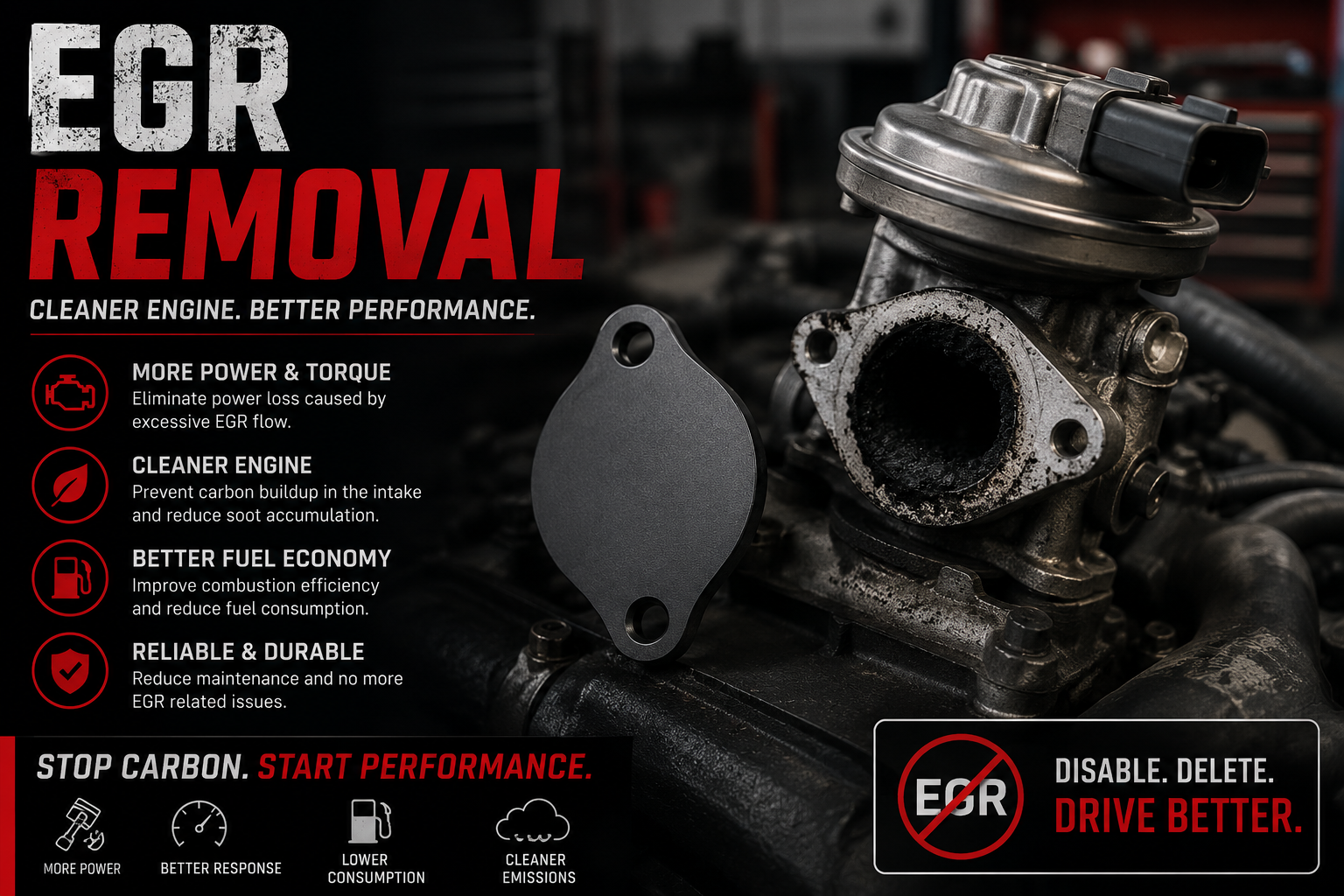
EGR removal refers to physically disabling or removing the EGR system from a vehicle, while software calibration can be discussed in relation to how the ECU manages the system.
These are separate aspects of the vehicle system and should not be treated as a simple software-only modification.
Before considering an EGR-related modification, the vehicle should be properly diagnosed and the applicable emissions and road-use requirements should be considered.
EGR modifications can have emissions and legal implications. Requirements vary by jurisdiction, so vehicle owners should check the rules applicable to their vehicle and intended use.
Legal and Emissions Considerations
EGR is an emissions-control system, and modifying or removing it can affect the vehicle's emissions characteristics.
The legal status of EGR removal varies depending on the country, vehicle category and intended road use.
Vehicle owners should verify the applicable local regulations before making any emissions-system modification.
Professional EGR Diagnosis
Proper diagnosis is important when an EGR-related warning or performance problem occurs.
A professional diagnostic process can help determine whether the issue is related to carbon deposits, valve operation, sensors, wiring, airflow or another underlying engine-management problem.
Identifying the actual cause can help avoid unnecessary component replacement or modifications.
When Should You Seek Professional Help?
Professional assistance should be considered when an EGR warning repeatedly appears, engine performance changes or the vehicle develops persistent drivability problems.
Continued operation with an unresolved engine management problem can potentially lead to additional issues.
A qualified technician can evaluate the vehicle, identify the underlying cause and explain the available options.
Frequently Asked Questions.
An EGR valve is part of the Exhaust Gas Recirculation system and controls the amount of exhaust gas that is redirected into the engine intake under appropriate operating conditions.
Exhaust gases can contain soot and other deposits that accumulate within the EGR system over time. The amount of buildup depends on the engine, operating conditions and vehicle condition.
Possible symptoms include engine warning lights, reduced performance, rough engine operation, poor throttle response, increased fuel consumption and excessive exhaust smoke.
Yes. An EGR fault or restricted system can affect airflow and engine management and may result in reduced performance or drivability problems.
Many modern vehicles use the ECU to control EGR operation based on engine operating conditions and information from relevant sensors.
The legal status of EGR removal depends on the country, vehicle category and intended use. Because EGR is part of an emissions-control system, applicable local regulations should be checked before making any modification.
Electronic diagnosis can provide useful information about EGR-related fault codes, sensor values and ECU operation. Physical inspection may also be required depending on the problem.
No. EGR-related symptoms can also be caused by sensors, wiring, airflow problems, carbon deposits or other engine-management faults. Proper diagnosis is therefore important.
An EGR fault can affect engine operation and fuel consumption in some situations. The actual effect depends on the vehicle and the underlying problem.
The appropriate solution depends on the underlying fault, vehicle condition and applicable regulations. Proper diagnosis should be performed before deciding on repair, replacement or another solution.