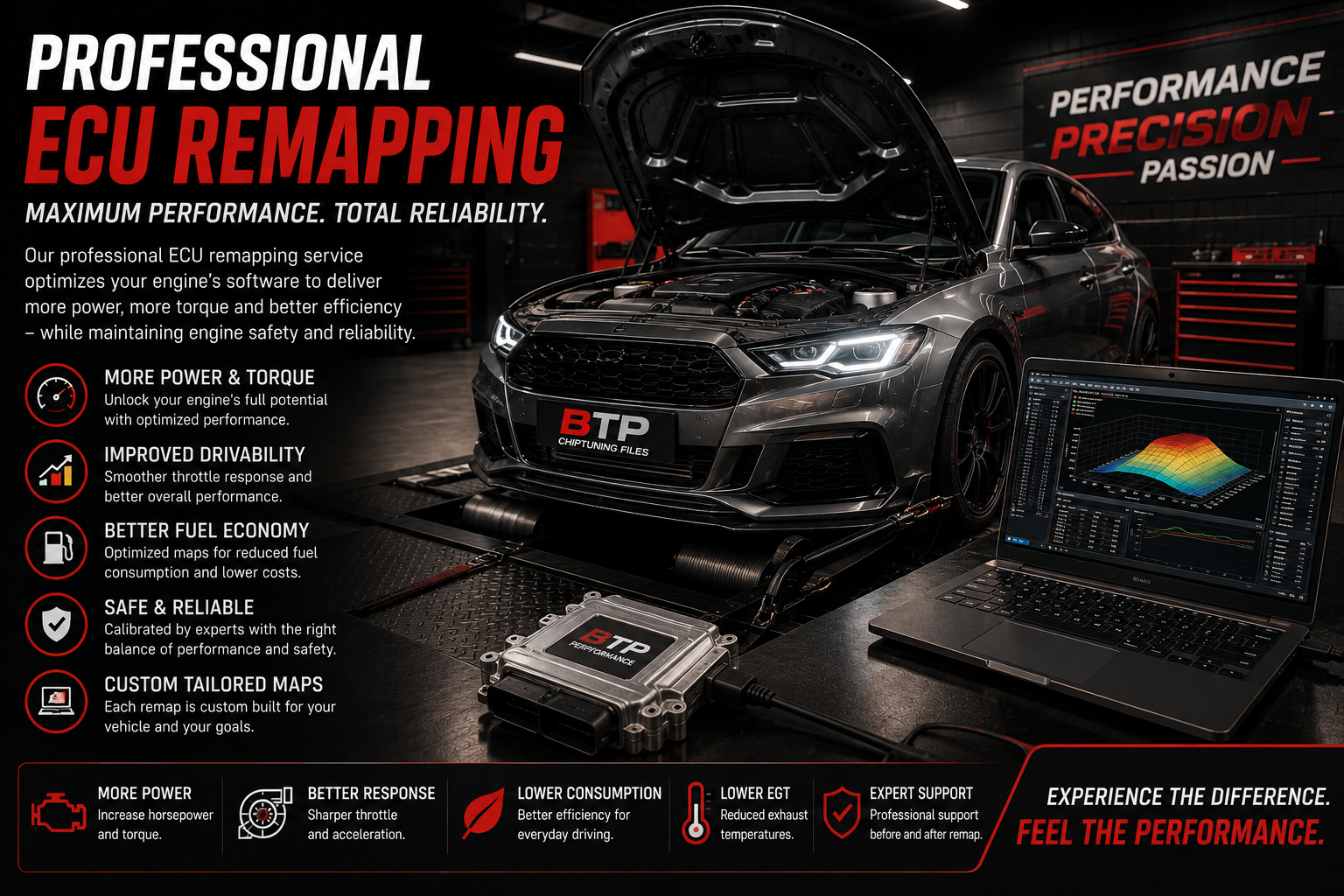
ECU remapping is the process of modifying selected software parameters within a vehicle's engine control unit to change how the engine operates.
A professional calibration can be developed around the specific engine, ECU software and vehicle configuration with the goal of improving performance, torque delivery, throttle response or other characteristics of the vehicle.
What Is ECU Remapping?
The engine control unit (ECU) is responsible for managing many aspects of modern engine operation.
ECU remapping involves analyzing and modifying selected calibration parameters within the ECU software to change the way the engine responds under different operating conditions.
The exact calibration areas depend on the vehicle, engine, ECU system and the intended tuning objective.
Professional ECU remapping should be developed around the specific vehicle and ECU software rather than using a generic calibration without considering the vehicle configuration.
How Does ECU Remapping Work?
The process normally starts with identifying the vehicle and ECU software and obtaining the original calibration.
The original software can then be analyzed to identify relevant maps and calibration parameters. Depending on the application, these can include areas related to fuel delivery, ignition or injection timing, boost control and torque management.
The calibration is then developed according to the vehicle configuration and intended performance characteristics.
What Does the ECU Control?
Modern ECUs control and coordinate numerous engine functions.
Depending on the engine and ECU architecture, these can include fuel delivery, ignition timing, injection timing, boost pressure, torque limits, throttle behavior and various protection strategies.
Because these systems interact with one another, professional calibration requires an understanding of the complete engine management strategy.
Benefits of ECU Remapping
Depending on the vehicle and calibration strategy, ECU remapping can be used to improve several aspects of engine behavior.
- Improved engine power and torque
- More responsive throttle behavior
- Improved torque delivery
- Changes to overall drivability
- Vehicle-specific performance optimization
The actual result depends on the original vehicle, engine, ECU software, hardware configuration and calibration.
ECU Remapping vs Chip Tuning
ECU remapping and chip tuning are often used to describe vehicle performance modifications, but the terminology can refer to different approaches.
Modern ECU tuning commonly involves working directly with the software stored within the vehicle's ECU. Older vehicles may use different approaches involving replaceable or modified memory components.
The exact method depends on the vehicle and ECU technology.
Stage 1, Stage 2 and Stage 3 Tuning
Tuning stages are commonly used to describe different levels of vehicle modification and calibration.
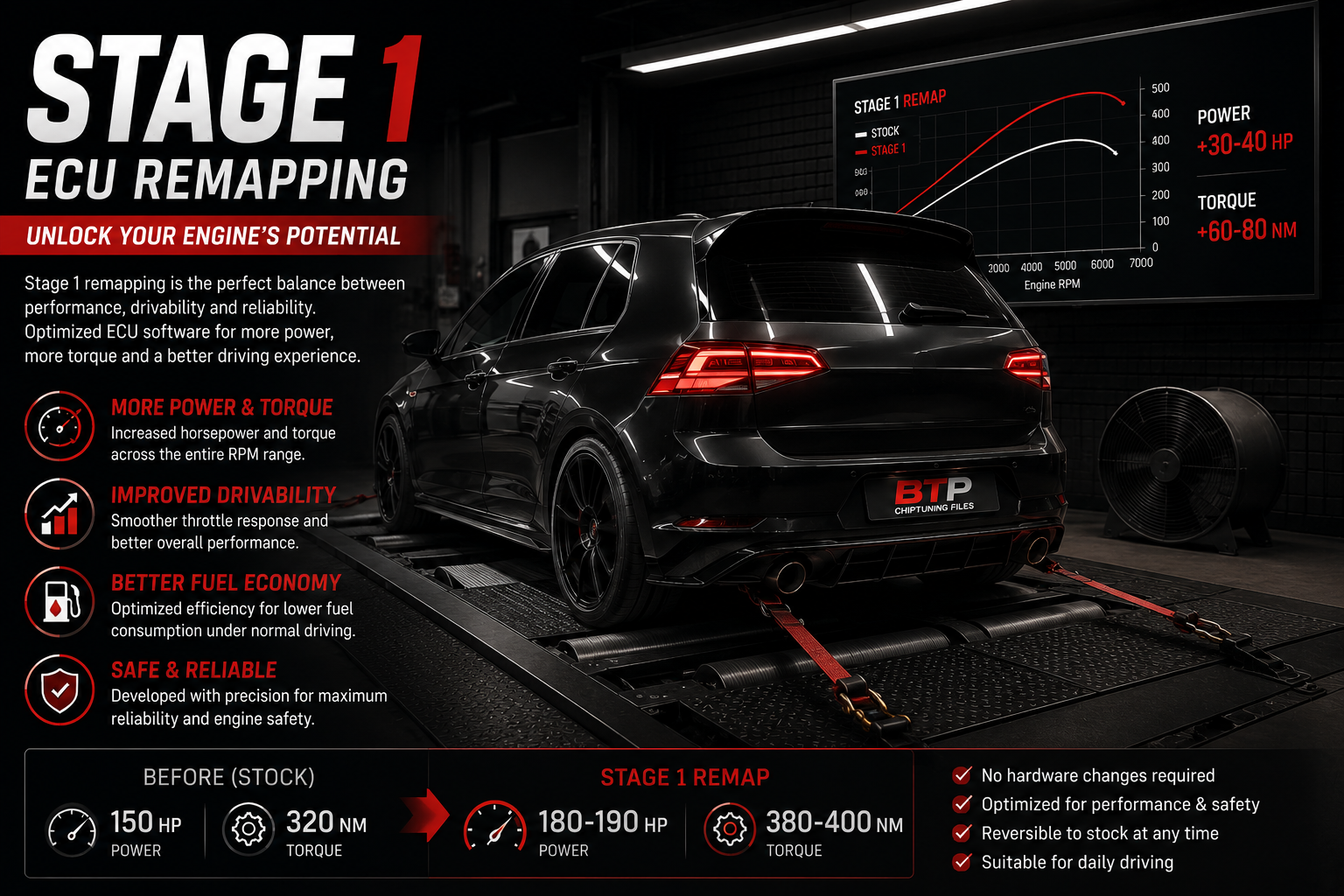
Stage 1 generally focuses on ECU calibration while retaining the original hardware configuration.
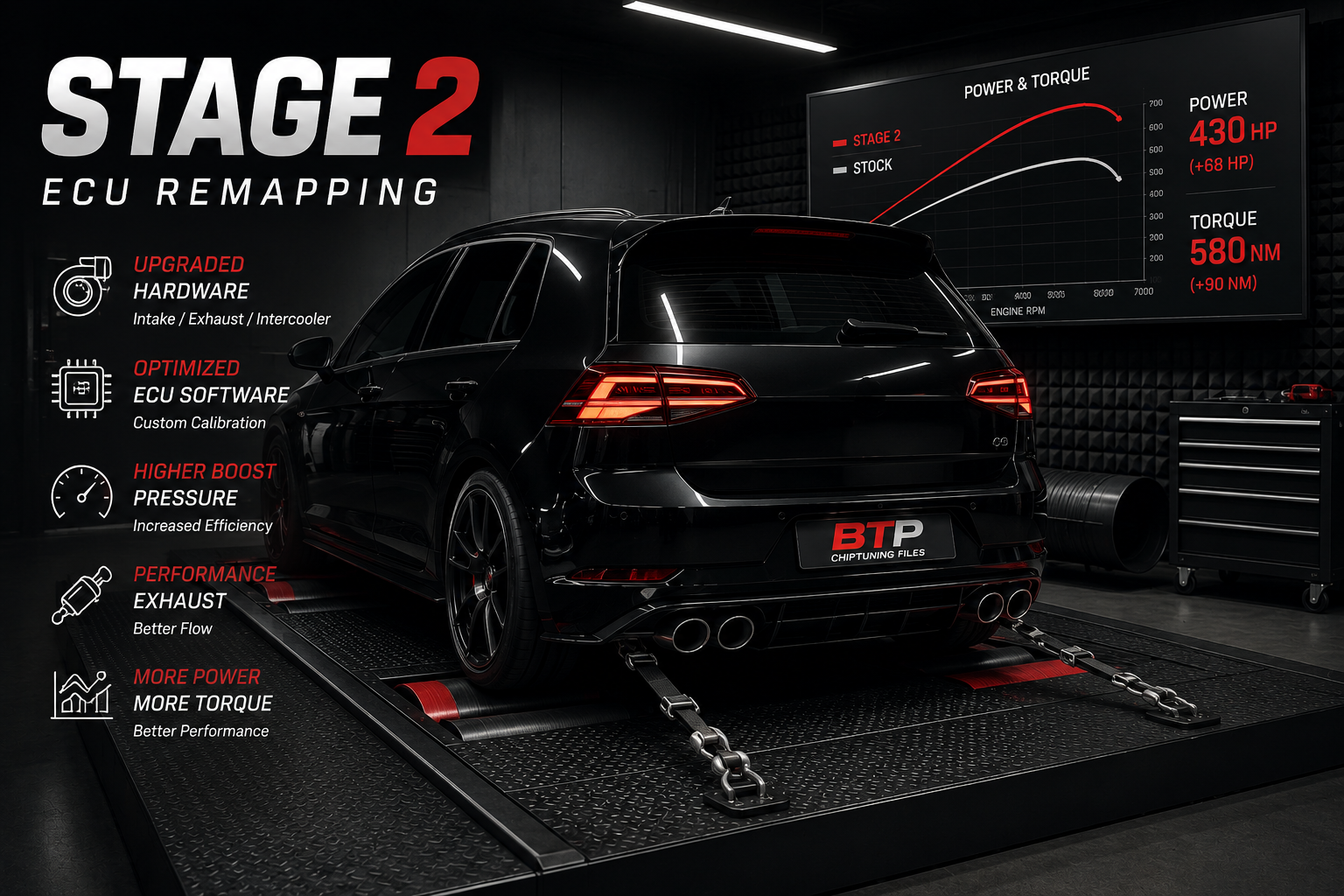
Stage 2 may involve supporting hardware modifications together with a calibration developed around the modified configuration.
More advanced setups are sometimes described as Stage 3, although the meaning of each stage is not standardized and can vary between tuning applications.
Diesel vs Petrol ECU Tuning
Diesel and petrol engines use different combustion and engine management strategies, so ECU calibration cannot follow one universal approach.
Diesel tuning may involve different injection, boost and torque-management strategies compared with petrol engine calibration.
Petrol engines can involve different considerations around ignition timing, air-fuel management and boost control depending on the engine configuration.
Professional ECU tuning should therefore be developed specifically for the engine and ECU being calibrated.
ECU Remapping and Fuel Consumption
Fuel consumption after an ECU remap depends on driving style, vehicle configuration, operating conditions and how the additional performance is used.
Improved torque delivery can sometimes allow a driver to use less throttle in certain situations, but increased performance can also result in higher fuel consumption when the additional power is used frequently.
ECU remapping should therefore not be considered a guaranteed fuel-saving solution.
Is ECU Remapping Safe?
The suitability of an ECU calibration depends on the vehicle, engine condition, hardware, ECU software and calibration strategy.
A professional approach should take the limitations of the vehicle into consideration rather than attempting to maximize every available parameter.
Existing mechanical problems should also be identified and addressed before performance tuning is considered.
Vehicle condition and calibration quality are important factors when evaluating the suitability of ECU tuning.
Choosing a Professional ECU Tuning Service
The quality of the calibration is an important part of the ECU tuning process.
A professional tuning service should work with the correct original ECU software and understand the vehicle configuration before preparing a calibration.
Vehicle-specific calibration, clear communication and appropriate consideration of the engine and hardware can help create a more predictable tuning process.
Frequently Asked Questions.
ECU remapping is the process of modifying selected software parameters within a vehicle's engine control unit to change how the engine operates.
The original ECU software is analyzed and selected calibration parameters are optimized according to the vehicle, engine, ECU system and intended tuning objective.
Depending on the vehicle and calibration strategy, ECU remapping can increase engine power and torque. The actual result varies between vehicles and should be considered vehicle-specific.
Fuel consumption depends on driving style, vehicle configuration and operating conditions. Improved torque delivery may affect efficiency in some situations, while frequent use of additional performance can increase fuel consumption.
The suitability of ECU remapping depends on the vehicle, engine condition, hardware and calibration strategy. A professional calibration should take the capabilities and limitations of the specific vehicle into account.
Stage 1 generally focuses on ECU calibration using the original hardware configuration, while Stage 2 may be developed around supporting hardware modifications.
In many cases the original ECU software can be restored when the appropriate original calibration is available. The exact process depends on the vehicle and ECU system.
Depending on the vehicle and calibration, ECU remapping can improve throttle response and torque delivery, which may make the vehicle feel more responsive during everyday driving.
Yes. ECU calibration can be performed on both diesel and petrol vehicles, although the calibration strategy differs according to the engine and ECU system.
Consider whether the tuning service works with the correct original ECU software, understands the vehicle configuration and develops calibrations according to the specific application rather than relying on a generic approach.