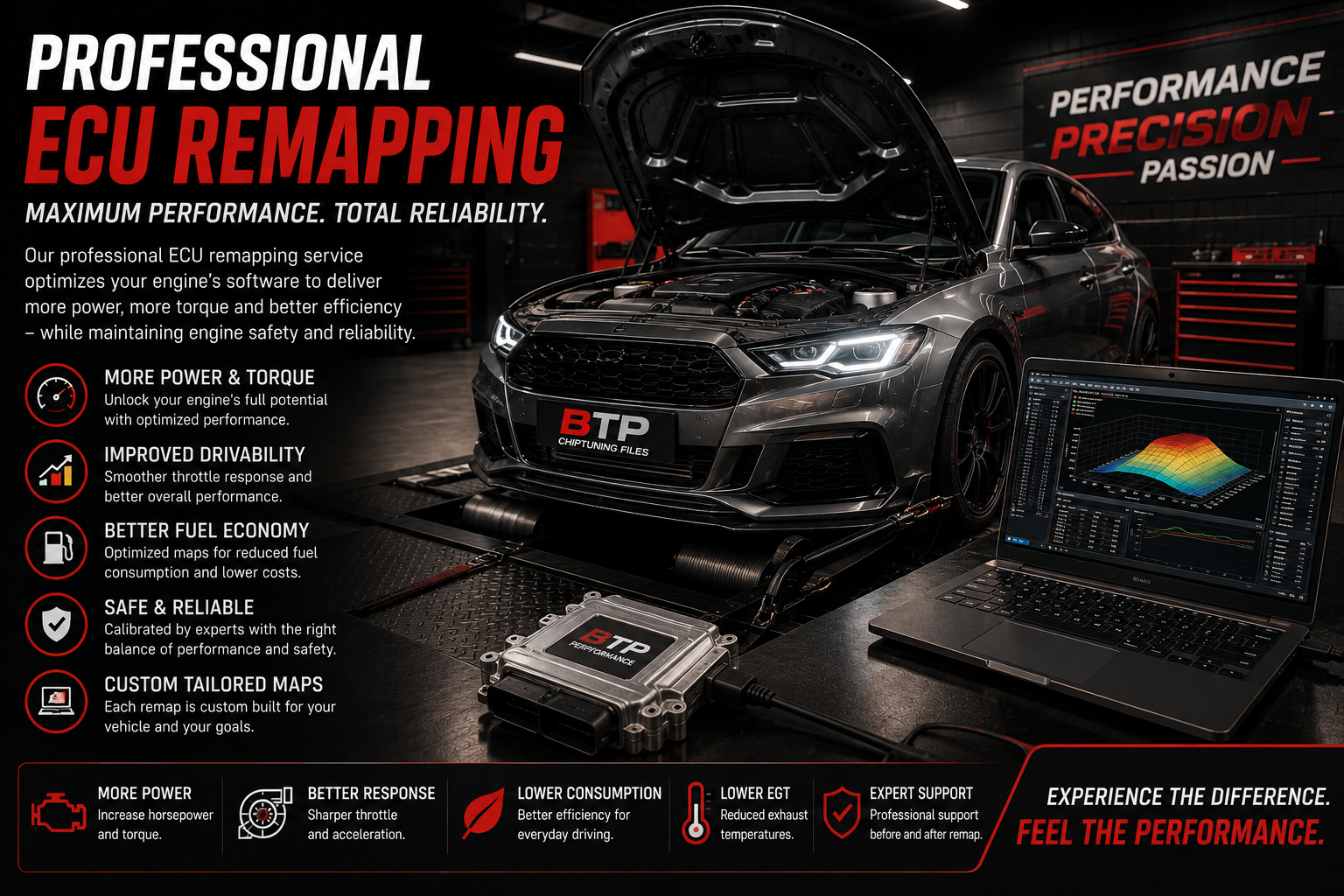
Stage 1 ECU remapping is one of the most common forms of software-based vehicle tuning. It involves optimizing selected parameters within the engine control unit (ECU) to improve the way the engine delivers power and torque.
Unlike tuning stages that may require additional hardware, Stage 1 tuning is generally developed around the vehicle's existing hardware configuration. The exact results depend on the engine, ECU, factory calibration, vehicle condition and other factors.
What Is Stage 1 ECU Remapping?
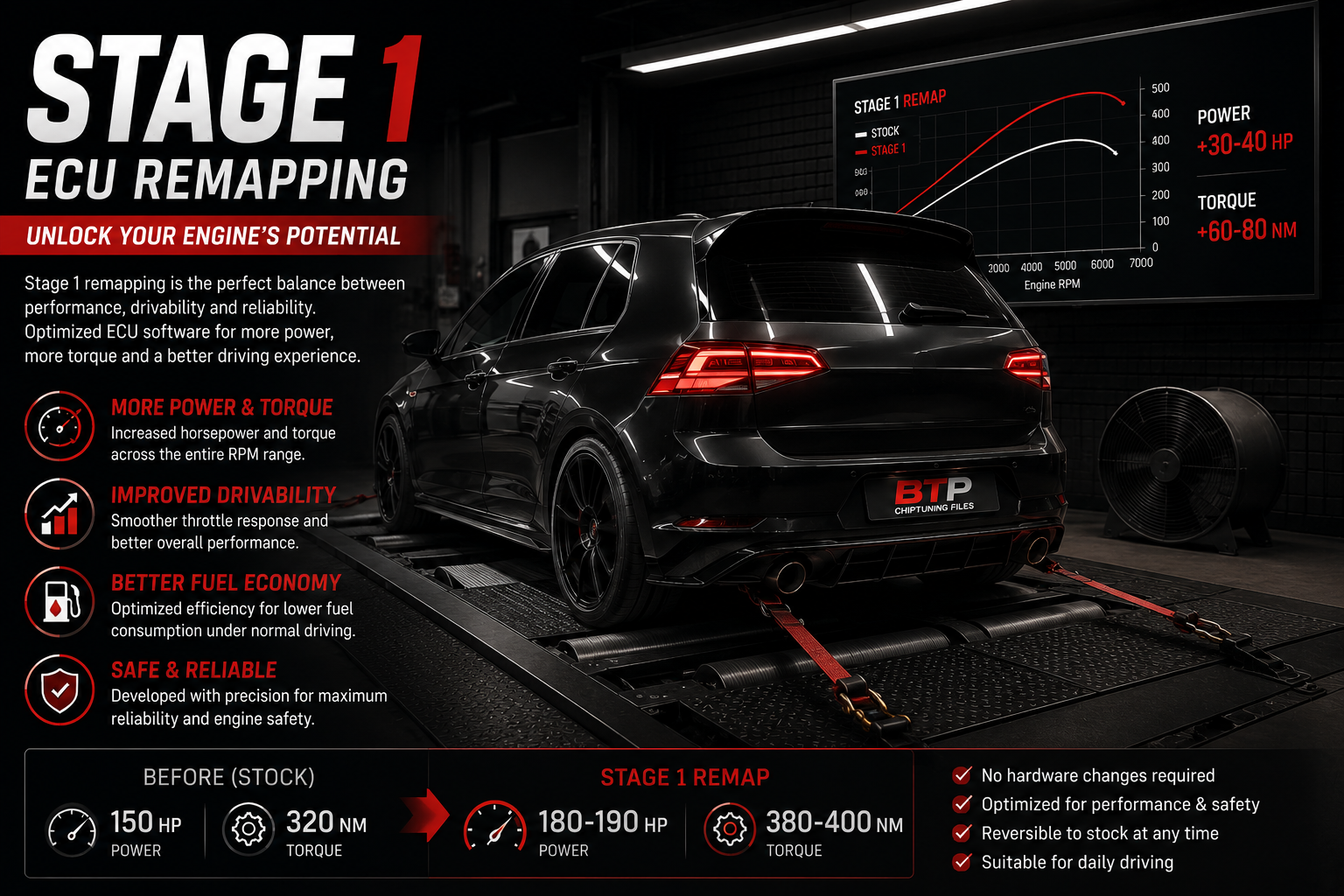
Stage 1 ECU remapping is a software calibration process designed to optimize the engine control unit for improved performance and drivability.
The ECU manages many aspects of engine operation, including fuel delivery, boost control, ignition or injection timing and torque management. A properly developed calibration can adjust relevant parameters while taking the original engine and hardware configuration into consideration.
The objective of Stage 1 tuning is not simply to increase individual values. A professional calibration should aim for a balanced relationship between performance, drivability and the capabilities of the vehicle.
Stage 1 is generally intended to work with the vehicle's original hardware configuration. The suitability of a calibration depends on the specific vehicle and its condition.
How Does Stage 1 Tuning Work?
The process normally starts with the original ECU software being identified and analyzed. The calibration contains multiple maps and parameters that influence how the engine operates under different conditions.
Depending on the vehicle and ECU, relevant calibration areas can be optimized to improve torque delivery, throttle response and overall engine performance.
The final calibration should be matched to the specific ECU software and vehicle configuration rather than applying a generic file to different vehicles.
What Performance Gains Can Stage 1 Provide?
The potential performance improvement from a Stage 1 remap varies significantly between vehicles. Engine type, factory power output, ECU strategy, fuel quality and vehicle condition can all influence the final result.
Depending on the application, drivers may notice improvements in engine power, torque delivery, throttle response and overall drivability.
Rather than focusing on a single maximum power figure, a good calibration should provide a predictable and usable increase across the relevant operating range.
Does Stage 1 Require Hardware Modifications?
Stage 1 tuning is generally designed for vehicles operating with their original engine and supporting hardware.
This is one of the main differences between Stage 1 and more advanced tuning stages. Depending on the vehicle and desired performance level, later stages may involve hardware modifications or additional supporting components.
However, the exact requirements always depend on the individual vehicle, engine and existing modifications.
Stage 1 Tuning and Daily Drivability
Stage 1 tuning is often selected by drivers who want a noticeable improvement in performance without changing the fundamental hardware configuration of their vehicle.
A well-developed calibration can focus not only on peak performance but also on how torque is delivered throughout the rev range.
This can make the vehicle feel more responsive during everyday driving, overtaking and acceleration.
Does Stage 1 Affect Fuel Consumption?
Fuel consumption after an ECU remap depends heavily on driving style, operating conditions and the way the additional performance is used.
ECU calibration can influence how the engine operates, but a Stage 1 remap should not be considered a guaranteed fuel-saving solution.
If additional power and torque are frequently used, fuel consumption may increase. Under some driving conditions, improved torque delivery may allow the vehicle to be driven more efficiently.
Stage 1 vs Stage 2 ECU Tuning
Stage 1 and Stage 2 represent different approaches to vehicle tuning.
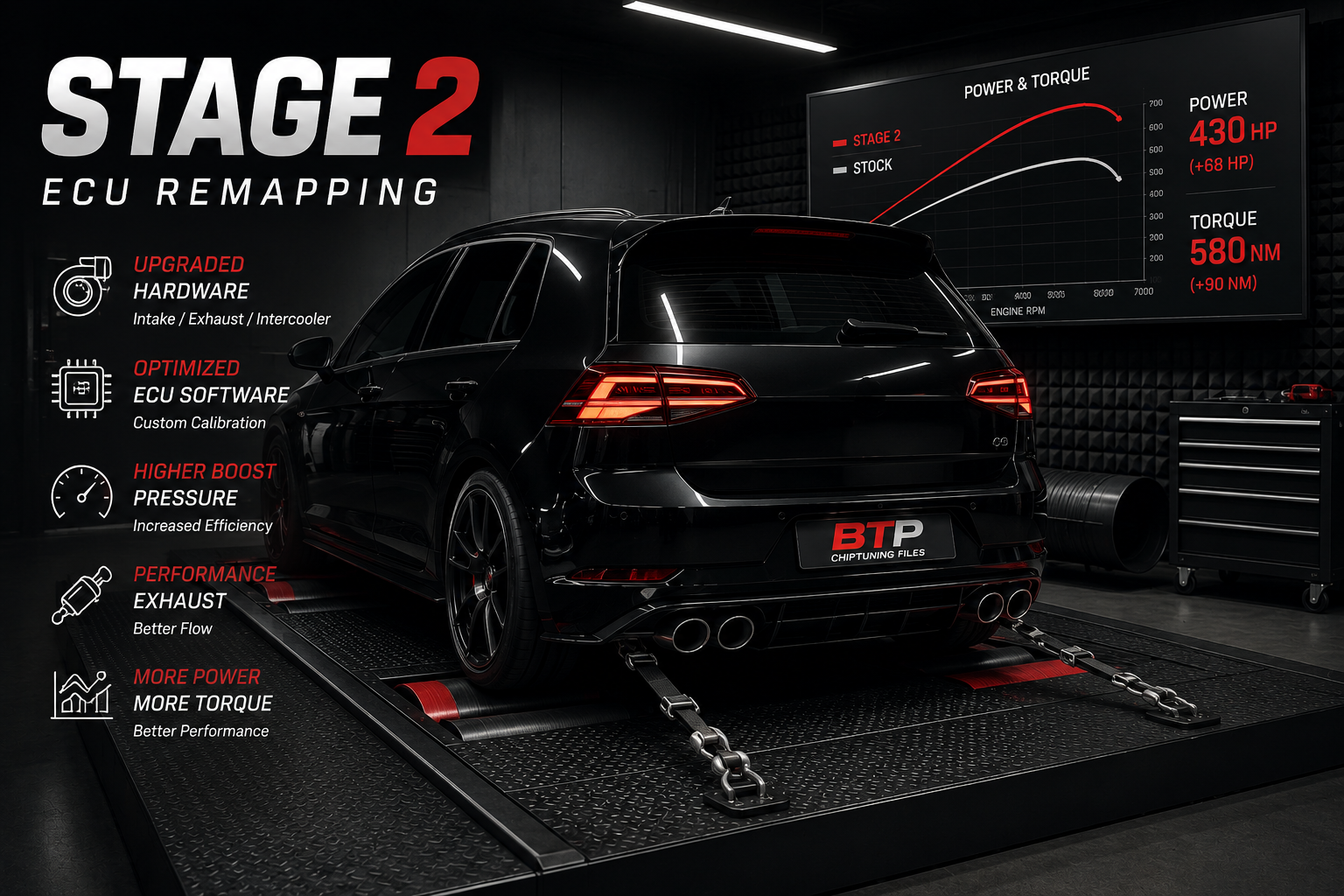
Stage 1 generally focuses on ECU calibration while retaining the original hardware configuration.
Stage 2 may involve additional hardware requirements depending on the vehicle, engine and tuning strategy.
Choosing between the two should therefore be based on the vehicle, its hardware and the intended performance target rather than simply selecting the highest available tuning stage.
Is Stage 1 ECU Remapping Safe?
The suitability of an ECU calibration depends on the individual vehicle, engine condition, hardware, software and calibration strategy.
A professional approach should take the limitations of the vehicle into consideration instead of attempting to maximize every available parameter.
Vehicle condition is also important. Existing mechanical faults, worn components or unresolved warning conditions should be addressed before performance tuning is considered.
ECU tuning should always be considered together with the condition of the vehicle and its hardware. Performance targets should be appropriate for the specific application.
Who Is Stage 1 Tuning For?
Stage 1 tuning can be suitable for drivers looking for improved engine response and performance while retaining the original hardware configuration.
It can be particularly relevant for vehicles where the owner wants a balanced improvement in performance without moving immediately to a more extensive hardware-based tuning setup.
The correct approach should always be determined according to the specific vehicle and its intended use.
Frequently Asked Questions.
Stage 1 ECU remapping is a software calibration process that optimizes selected engine parameters to improve performance, torque delivery and drivability while generally retaining the vehicle's original hardware configuration.
There is no single power increase that applies to every vehicle. The potential result depends on the engine, ECU, factory calibration, fuel quality, vehicle condition and other factors.
Stage 1 is generally developed around the vehicle's original hardware configuration. The exact suitability depends on the specific engine, ECU and vehicle condition.
The suitability of a Stage 1 calibration depends on the vehicle, its hardware, condition and calibration strategy. A professional calibration should take the capabilities and limitations of the specific application into account.
Fuel consumption depends strongly on driving style and operating conditions. Using additional performance frequently can increase fuel consumption, while improved torque delivery may allow more efficient driving in some situations.
Depending on the vehicle and calibration, Stage 1 tuning can improve throttle response and torque delivery, making the vehicle feel more responsive during everyday driving.
Stage 1 generally focuses on ECU calibration using the original hardware configuration, while Stage 2 applications may involve additional hardware modifications depending on the vehicle and tuning strategy.
In many cases the original ECU software can be retained and restored when the appropriate original file is available. The exact process depends on the vehicle and ECU system.
Stage 1 is commonly considered for daily-driven vehicles because it generally focuses on software calibration without requiring extensive hardware changes. Suitability still depends on the individual vehicle and its condition.