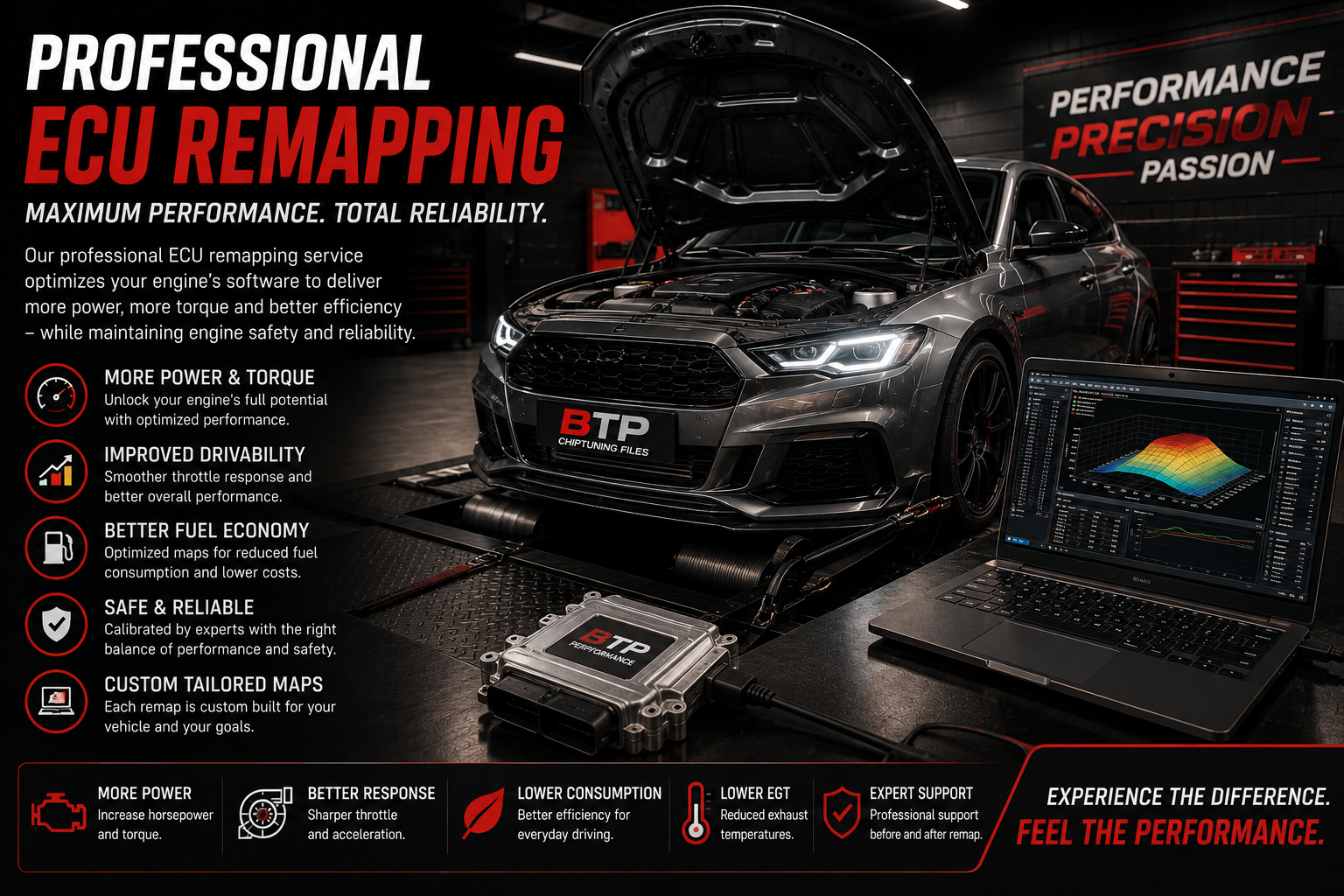
Stage 3 ECU tuning generally refers to advanced performance builds where significant hardware modifications are combined with a calibration developed specifically for the modified vehicle.
Unlike Stage 1 or many Stage 2 applications, Stage 3 builds can involve substantially upgraded engine, turbocharging, fuel-system or supporting components. The ECU calibration must therefore be developed around the complete vehicle configuration.
What Is Stage 3 ECU Tuning?
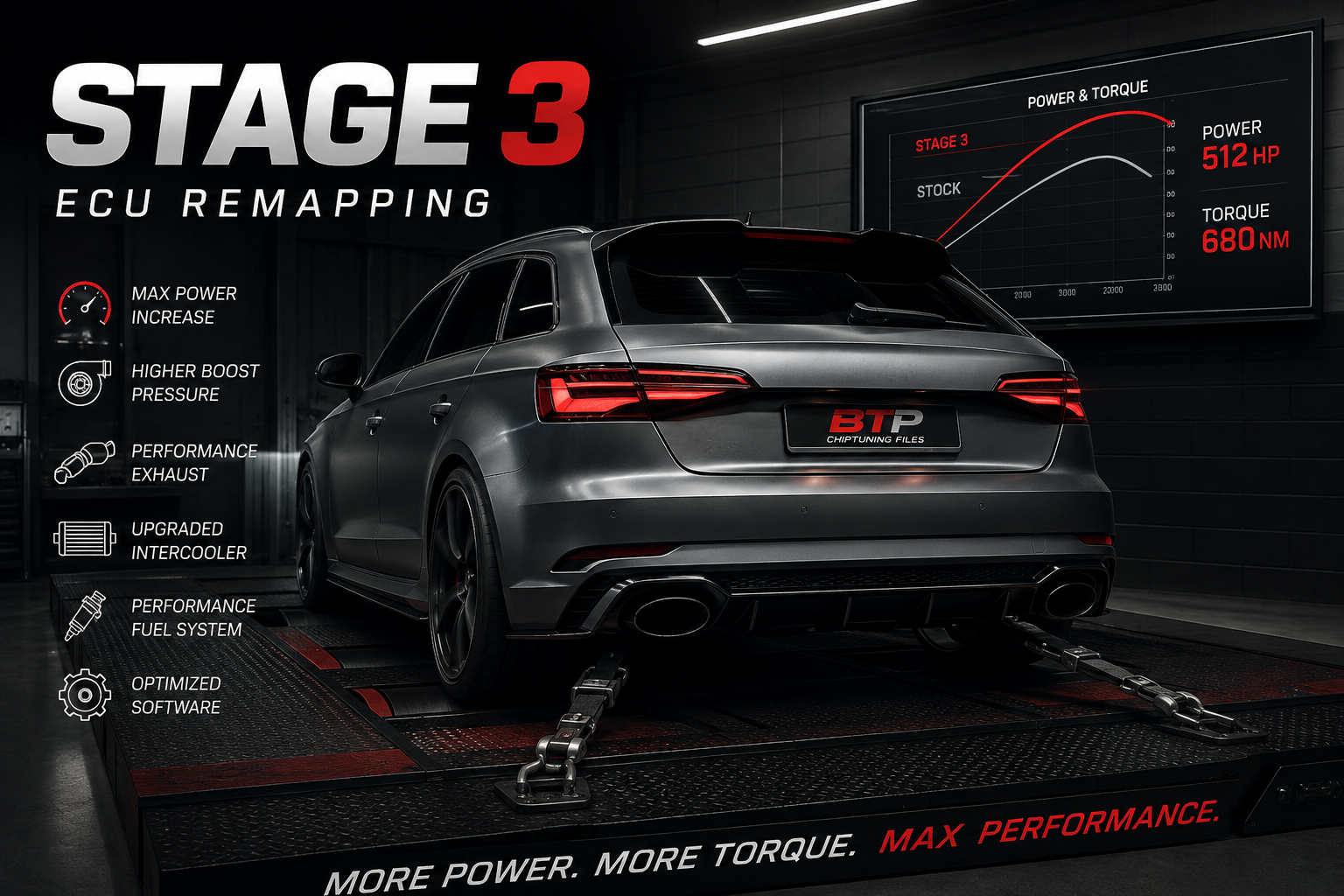
Stage 3 is commonly used to describe a more advanced level of vehicle performance modification where significant hardware upgrades are combined with ECU calibration.
There is no universal technical definition of Stage 3. The exact meaning can vary between tuning companies, engines and vehicle platforms.
In general, the calibration is developed around the modified hardware rather than simply applying a standard software upgrade.
Stage 3 is not a universal specification. The required hardware and calibration depend on the specific engine, ECU and performance target.
Stage 3 vs Stage 1 and Stage 2
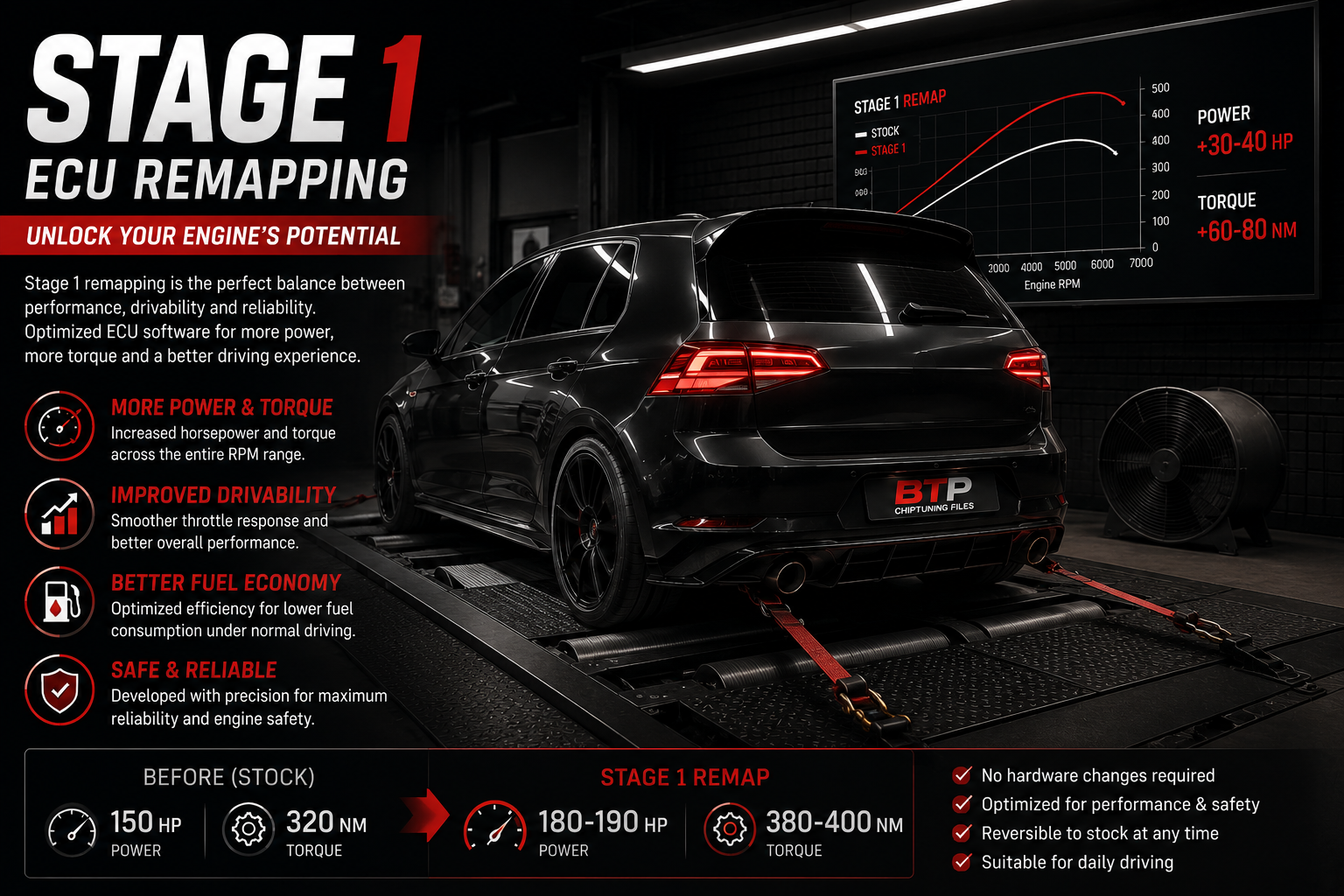
Stage 1 generally focuses on ECU calibration while retaining the original hardware configuration.
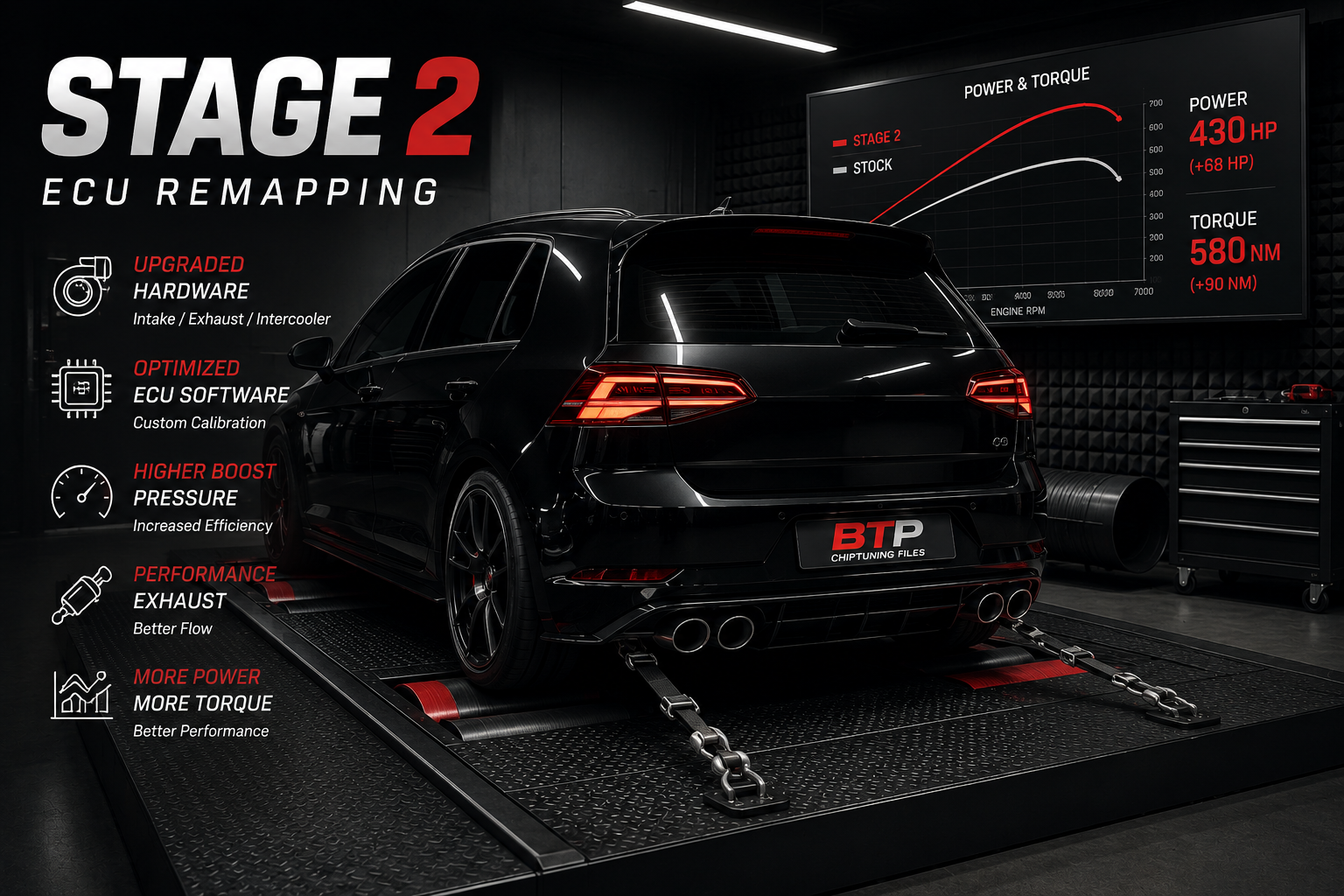
Stage 2 may combine ECU calibration with supporting hardware modifications designed around a higher performance target.
Stage 3 typically involves a more extensively modified vehicle and a calibration developed around those modifications.
The exact boundaries between stages are not standardized and can differ between applications.
Supporting Hardware for Stage 3
Stage 3 projects can involve substantial changes to the vehicle hardware.
Depending on the engine and performance objective, supporting modifications may involve components such as turbocharging systems, intercooling, fuel-system components, exhaust systems or other engine-supporting hardware.
The appropriate hardware depends entirely on the specific vehicle and intended performance target.
Turbocharger and Airflow Upgrades
Higher-performance turbocharging systems can provide increased airflow potential compared with the original equipment.
When turbocharger hardware is changed, the ECU calibration must account for the characteristics and operating range of the new configuration.
Supporting airflow and cooling systems may also become increasingly important as performance levels increase.
Fuel System Considerations
Increased engine output can require greater fuel-system capacity depending on the engine and performance target.
Injectors, pumps and other fuel-system components must be suitable for the intended application and operating conditions.
ECU calibration should be developed around the actual fuel-system configuration rather than assuming that every vehicle has the same available capacity.
Stage 3 ECU Calibration
Stage 3 calibration requires a detailed understanding of the modified vehicle configuration.
Depending on the application, calibration can involve areas related to torque management, boost control, fuel delivery, ignition or injection timing and other engine-management strategies.
Because hardware characteristics can change substantially, a generic calibration is not an appropriate substitute for vehicle-specific tuning.
Engine Protection and Reliability
Increasing engine output also increases the importance of considering thermal and mechanical limitations.
Cooling capacity, lubrication, drivetrain components and engine operating conditions can all become more important as performance increases.
A responsible calibration should consider the limitations of the complete vehicle rather than focusing only on maximum power.
Higher performance can place additional demands on engine, drivetrain and supporting components. Hardware condition and suitability should be evaluated before tuning.
Drivetrain Considerations
Engine performance does not exist independently from the rest of the vehicle.
Increased torque can place additional demands on clutches, transmissions, differentials and other drivetrain components.
For advanced builds, the drivetrain should therefore be considered when establishing an appropriate performance target.
Stage 3 Diesel vs Petrol Tuning
Stage 3 tuning strategies can differ significantly between diesel and petrol engines.
Diesel applications may focus on advanced boost, injection and torque-management strategies, while petrol applications can involve different considerations around ignition, airflow, fueling and boost control.
The engine architecture and ECU system ultimately determine the appropriate calibration approach.
Professional Stage 3 Tuning
Advanced performance builds require a more detailed tuning process than a standard ECU remap.
The vehicle hardware, original ECU software, engine configuration and intended performance target should all be considered before calibration.
Professional tuning focuses on developing a suitable calibration for the actual vehicle rather than applying a generic Stage 3 file.
Frequently Asked Questions.
Stage 3 ECU tuning generally refers to advanced performance builds where significant hardware modifications are combined with ECU calibration developed specifically for the modified vehicle.
Stage 2 commonly combines ECU calibration with supporting hardware modifications, while Stage 3 generally refers to more extensively modified vehicles requiring a more advanced, vehicle-specific calibration.
No. Stage 3 is not a standardized technical specification. The hardware, performance target and calibration strategy can vary significantly between vehicles and tuning applications.
Stage 3 applications generally involve significant supporting hardware modifications, although the exact components depend on the vehicle, engine and intended performance target.
Stage 3 builds are generally designed around higher performance targets, but the achievable result depends on the engine, hardware configuration, ECU system and calibration.
The suitability of a Stage 3 calibration depends on the condition and capabilities of the engine, drivetrain, cooling system, fuel system and other supporting components. Higher performance can place additional demands on the vehicle.
Yes. Diesel engines can be developed for advanced performance applications, although the required hardware and ECU calibration depend on the specific engine and vehicle.
Yes. Petrol engines can also be developed for advanced performance applications. Turbocharging, fueling, cooling and ECU calibration requirements depend on the specific engine.
Advanced Stage 3 builds generally require calibration developed around the actual hardware configuration rather than a generic calibration.
The drivetrain should be evaluated according to the expected torque and performance level. Higher engine output can increase the load placed on clutch, transmission and other drivetrain components.